

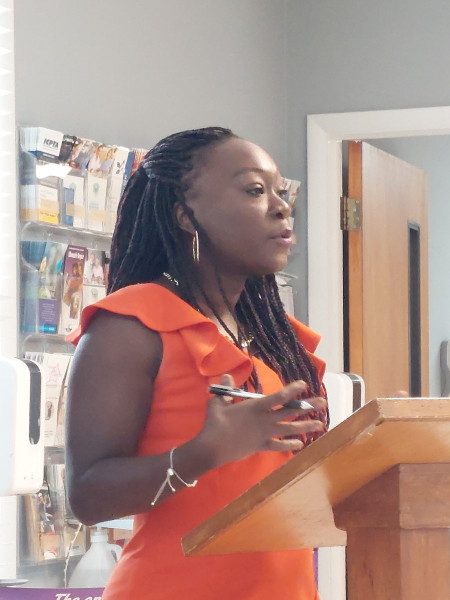

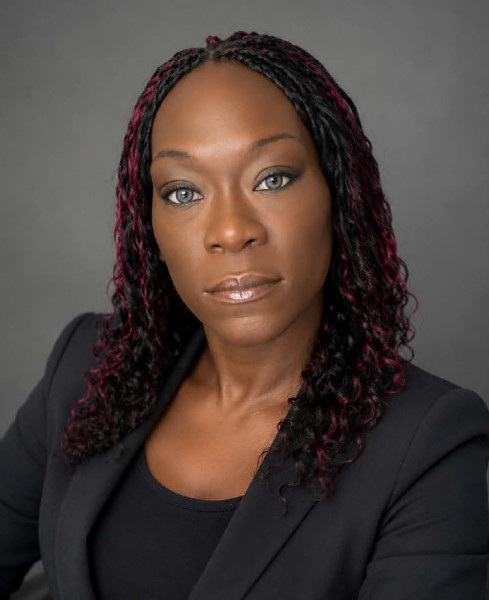
Bellevue University Alum Uses AI and Data Science to Strengthen Community Violence Intervention
- Barbara Gaskins, a Bellevue University alumna, is combining expertise in criminal justice, re-entry, community violence intervention, and data science to improve outcomes for people impacted by incarceration and violence.
- After earning her bachelor's and master's degrees from Bellevue University, Gaskins gained the credentials, confidence and technical skills to expand her advocacy and influence public policy conversations.
- Her work focuses on ensuring data and artificial intelligence are used responsibly, particularly in communities where bias, inaccurate data and cultural misunderstandings can have serious consequences.
- As the recipient of a Kaggle Benchmark Research Grant, Gaskins is developing the first AI evaluation framework designed to help violence professionals use technology safely while keeping human judgment and community trust at the center of decision-making
Supporting Violence Protection Professionals While Protecting the Humanity of the People They Serve
Barbara Gaskins’ career sits at a powerful intersection: criminal justice, community violence intervention, reentry, public policy, technology, and community-based advocacy.
It is a space few people occupy—and one urgently in need of her perspective.
Based in Greenville, North Carolina, Gaskins works to improve the systems serving people affected by incarceration and community violence. She has created two reentry manuals for North Carolina, adapted a U.S. Department of Justice reentry simulation specifically for the state and pursued public office, running for the U.S. House of Representatives and mayor.
Now, she is exploring how data science and artificial intelligence can support violence-prevention professionals while protecting the humanity of the people they serve.
Her path to this work began long before AI became part of everyday conversation. It was strengthened by an education at Bellevue University that helped validate the professional-level work she was already doing—and gave her the confidence to take that work further.
Doing Degree-Level Work Without the Degree
Before attending Bellevue University, Gaskins worked in mental health, substance use, and criminal justice. She knew she was capable and experienced. She was already performing work that required significant knowledge and responsibility.
The problem was that she did not yet have the degree to prove it.
Gaskins understood that earning a degree would help align her credentials with her abilities. Yet, as a working mother who had welcomed her first child at 18, she needed a university designed for the realities of adult life.
Bellevue University provided that opportunity.
Gaskins earned her Bachelor of Science degree in Behavioral Science in 2010 while balancing work, motherhood, and the responsibilities of maintaining a home. She found the coursework relevant to her experience in mental health and substance use—and immediately applicable to the communities she served.
“Bellevue was that University for me,” she said.
'A Stepping Stone to Everything Else'
She also remembers the accessibility and encouragement she received. Her university coach, Tamara, was available by phone or text, offering praise, accountability, and reminders to keep moving forward.
That support mattered. So did the sense of validation that came from completing her degree.
Gaskins describes her Bellevue University education as “a stepping stone to everything else” she has accomplished. Without it, she believes she might still be doing high-level work without receiving appropriate recognition or compensation.
After earning her bachelor’s degree, she went on to earn her Master of Science degree in Data Science from Bellevue University in 2026. Her last course was called Generative AI.

How can we actually help people if we’re getting three different reports for the exact same people?

When Data Does Not Tell One Story
Gaskins’ interest in data science grew directly from her re-entry work.
In North Carolina, she found that three different sources could provide three significantly different statistics about the same issue, including recidivism. When information is outdated, inconsistent, or influenced by funding priorities, it becomes difficult to understand what is actually happening—and even harder to design effective solutions.
“How can we actually help people if we’re getting three different reports for the exact same people?” she asked.
Her advanced studies in data science helped her connect her knowledge of communities with a more formal understanding of technology and responsible data use. Her goal is not simply to collect more information. It is to ensure that data and AI are used accurately, equitably, and in ways that genuinely help people.
One of her greatest concerns is the way AI can misunderstand African American Vernacular English, particularly when people express grief, anger, or trauma.
Working on Technology That Supports Rather Than Interrupts
Language that reflects pain following the death of a friend, for example, could be interpreted by an automated system as a threat. Without cultural understanding or human context, AI could misidentify someone as dangerous when that person is actually grieving.
The implications extend well beyond community violence intervention. Similar biases could affect hiring, criminal justice, education, and other settings where automated systems review people’s words, histories, or online activity.
Gaskins is working to bring those risks into the conversation—and to help create something better in the world of Community Violence Intervention (CVI) that is built on trust, lived experience, emotional intelligence, credibility, and local knowledge. Violence interrupters and other trusted community messengers develop relationships no algorithm can reproduce.
“I am not trying to replace our credible messengers or our violence interrupters with AI,” Gaskins said. Instead, she envisions technology that supports practitioners while leaving intervention and decision-making in human hands.
Unique Work That Has Earned a Kaggle Research Grant
That distinction captures what makes Gaskins’ work so important. She is not approaching AI only as a technologist. She understands the people, language, histories, and communities behind the data, and her unique work has earned Gaskins a Google/Kaggle Benchmark Research grant. Her AI Assistant is the first artificial intelligence evaluation framework for CVI that measures whether AI models can safely support violence interrupters and credible messengers in their life-saving work.
Kaggle (owned by Google) Benchmark grants are given to builders of novel Large Language Model (LLM) evaluations, access to major models (OpenAI, Google, Anthropic, DeepSeek, etc.), and managed engineering infrastructure via Kaggle Benchmark.
Her Bellevue University education helped give her the credentials, knowledge, and confidence to step forward. Since then, she has continued learning, questioning systems, and turning her experience into resources that can help others.
Technology will continue to advance. Barbara Gaskins is working to ensure that humanity, fairness, and community advance with it.
Founded in 1966, Bellevue University is a non-profit university with more than 70,000 graduates worldwide. The University is a recognized national leader in preparing students for lifelong success with career-relevant knowledge and skills, while making college affordable. Routinely ranked among the nation’s top military and accessible institutions, the University serves residential students at its main campus in Bellevue, Nebraska, and everywhere online with more than 85 degree programs uniquely designed for working adults. The University is accredited by The Higher Learning Commission (hlcommission.org).