

Bellevue University Biology Students Present Campus and Statewide Research at 2026 Nebraska Academy of Sciences Annual Meeting
Bellevue University biology students presented original research at the 136th Nebraska Academy of Sciences (NAS) Annual Spring Meeting, a statewide forum for scientific scholarship. The student-led projects explored public health and environmental science topics, reflecting applied research experiences supported through Bellevue University’s academic programs.
Key Facts
- Event: 136th Nebraska Academy of Sciences Annual Spring Meeting (Hybrid)
- Date: April 24, 2026
- Location: Held at the University of Nebraska–Lincoln, East Campus Union
- Bellevue University student presenters: Emily Sweet and Mia Arnold
- Presentation format: Biology poster sessions
- Research areas: Antibiotic resistance and fungal biodiversity
Statewide Forum for Student Research
Bellevue University students showcased hands-on scientific research at the 2026 Nebraska Academy of Sciences Annual Spring Meeting, a long-standing forum that brings researchers from across the state together to share discoveries and practical applications of science. The meeting marked the 136th year of the NAS tradition, reinforcing its role in advancing student and faculty scholarship in Nebraska.

“Both of these projects reflect what Bellevue University strives to provide our students—meaningful, applied research experiences that extend beyond the classroom,” said Dr. John Kyndt, faculty advisor for the projects. “Presenting at the Nebraska Academy of Sciences allows our students to contribute to real scientific conversations while building confidence and professional skills.”

Campus-Based Research Addresses Public Health
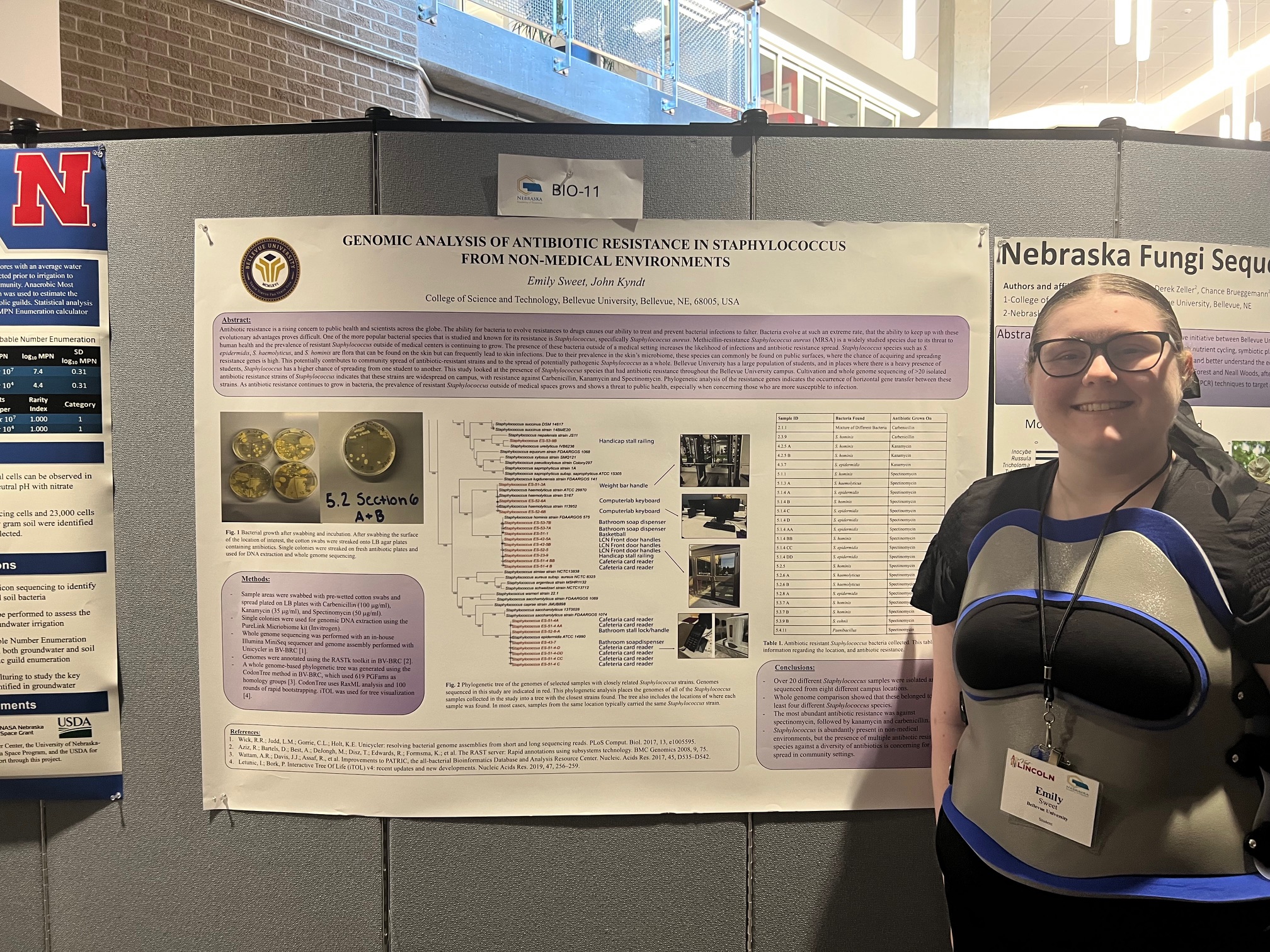
Emily Sweet presented a genomic analysis of antibiotic-resistant Staphylococcus species identified in non-medical environments across the Bellevue University campus. Her research examined more than 20 resistant strains and revealed resistance to multiple commonly used antibiotics, along with evidence of horizontal gene transfer. The project contributes to a broader understanding of how antibiotic resistance spreads within community settings and underscores the value of campus-based research tied to public health concerns.
Advancing Knowledge of Nebraska’s Fungal Biodiversity
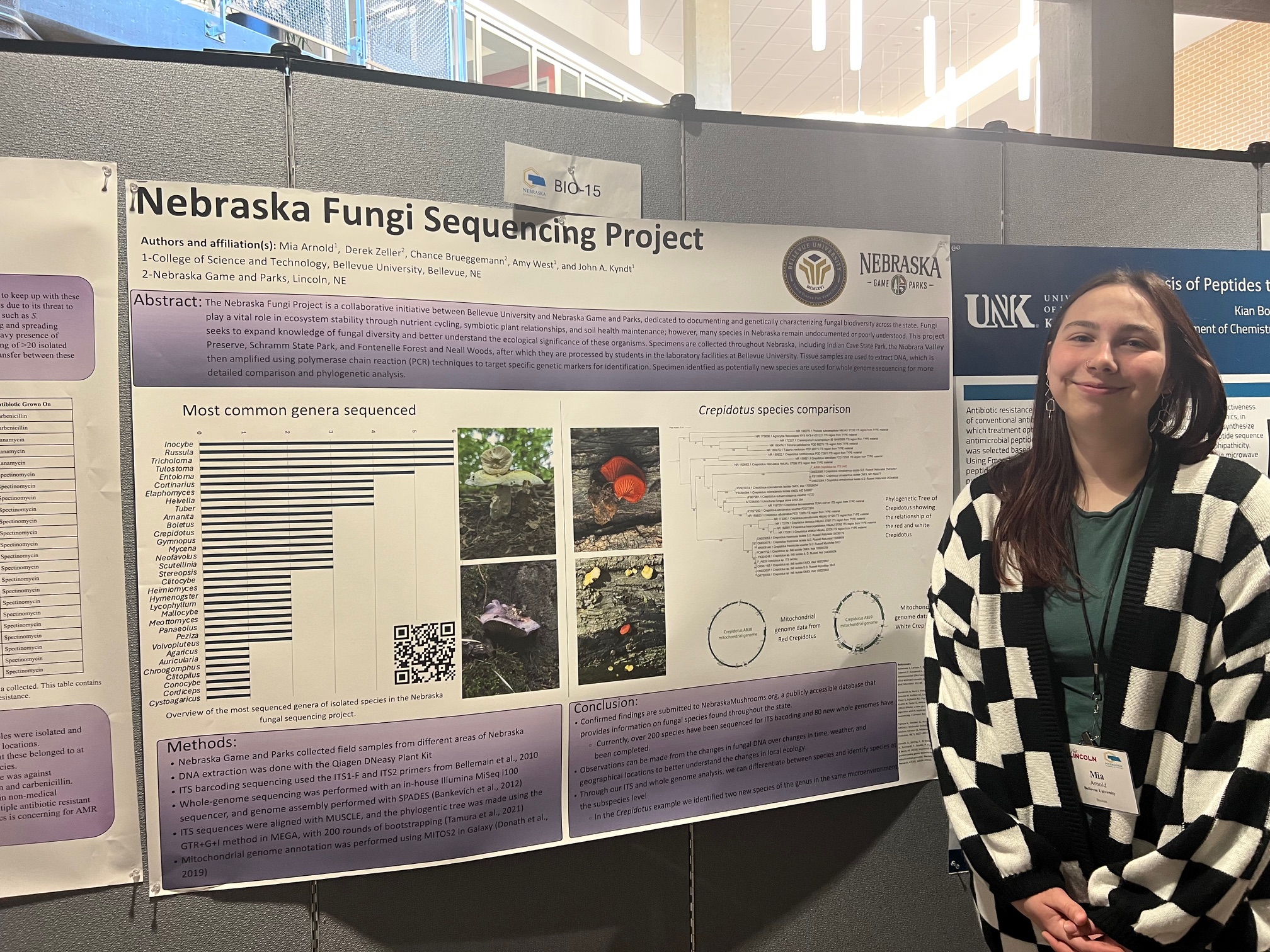
Mia Arnold presented findings from the Nebraska Fungi Sequencing Project, a collaborative initiative between Bellevue University and Nebraska Game and Parks. The project documents fungal biodiversity across Nebraska using modern DNA sequencing techniques. Through field collection, laboratory analysis, and genomic comparison, the research team has identified numerous species, including previously undocumented fungi. Verified results are shared through NebraskaMushrooms.org, expanding public access to ecological data and supporting conservation and education efforts.
Founded in 1966, Bellevue University is a non-profit university with more than 70,000 graduates worldwide. The University is a recognized national leader in preparing students for lifelong success with career-relevant knowledge and skills, while making college affordable. Routinely ranked among the nation’s top military and accessible institutions, the University serves residential students at its main campus in Bellevue, Nebraska, and everywhere online with more than 85 degree programs uniquely designed for working adults. The University is accredited by The Higher Learning Commission (hlcommission.org).