

The Chemistry of Connection: Dr. Scott Pinkerton’s Life in the Classroom
- Dr. Scott Pinkerton’s teaching philosophy centers on effort, connection and mentorship, encouraging students to show up, work hard and engage in the learning process.
- A Bellevue University faculty member since 2009, Pinkerton teaches chemistry and directs the biology program, often guiding students through multiple semesters and building lasting relationships along the way.
- Pinkerton values Bellevue University’s diverse learning environment, where traditional students, working professionals, military-affiliated learners and others enrich one another’s educational experiences.
Knowing the Student Behind the Score
A student once asked Dr. Scott Pinkerton what he needed to score on his final exam to pass general chemistry. The answer was 60%. When Pinkerton graded the exam, it was worth 58%. He knew what the number alone could not show. The student, a business major from Guatemala who had taken chemistry because it fit his schedule, had worked hard all semester and had told his professor of his desire to do well. Pinkerton added two points to the graded exam with a note: “For trying.” The student passed.
It is a story Pinkerton still tells his classes at Bellevue University, where he primarily teaches chemistry and directs the biology program. His message is straightforward: Show up, do the work and let your professor see that you care about learning. He realizes that not every student is on the same plain with similar motivations. “Some arrive ready to push themselves,” he said. “Others need time to find their footing. I just want them all to understand that effort matters.”
Pinkerton has had plenty of time to see what that approach can mean. He joined Bellevue University in July 2009 and is now in his 17th year here. Students in the biology program may take his classes across five or six semesters, moving from introductory science to subjects such as Organic Chemistry and Botany. By graduation, the professor and students know far more about one another than just their names. “They’re going to know who I am,” he says. “And I’m going to know who they are.”
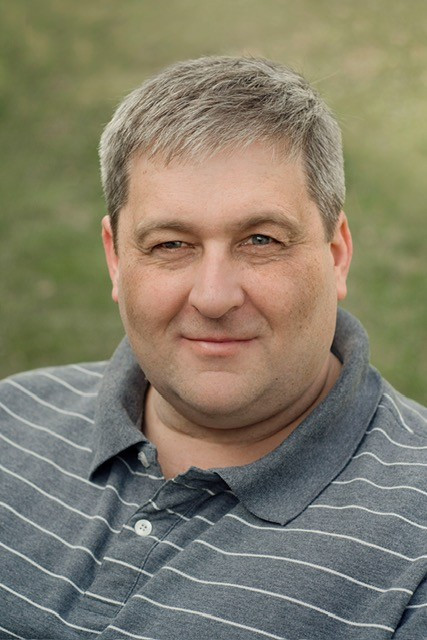
They’re going to know who I am. And I’m going to know who they are.

A Nebraska Beginning
Pinkerton grew up in Lincoln, where his parents and grandparents lived. He graduated from Lincoln Southeast High School in 1993 and headed to the University of Nebraska–Lincoln. Science appealed to him early, though he had to choose which branch to pursue. He settled on Biochemistry and became involved in undergraduate laboratory research.
He also spent four years playing trombone in the Cornhusker Marching Band. His daughters have carried music into the next generation, although he says it has been a long time since he last played.
After earning his undergraduate degree, Pinkerton went directly into a doctoral program at Texas A&M University. He spent seven years in Texas, earned his Ph.D. and married into an Aggie family. His first experience teaching had come during his senior year at Nebraska, when a shortage of graduate students gave him the chance to lead a laboratory section. He taught labs again at Texas A&M.
His career initially led toward research. In 2004, Pinkerton took a position as a Research Molecular Biologist with the U.S. Department of Agriculture in Peoria, Illinois. He and his wife moved there, started their family and eventually welcomed three daughters, including twins.
Five years later, when his USDA appointment was ending, a position opened at Bellevue University. He interviewed by phone and happened to mention that he would be visiting Nebraska the following week. The University invited him to interview in person. Soon, the Lincoln native was back in his home state.
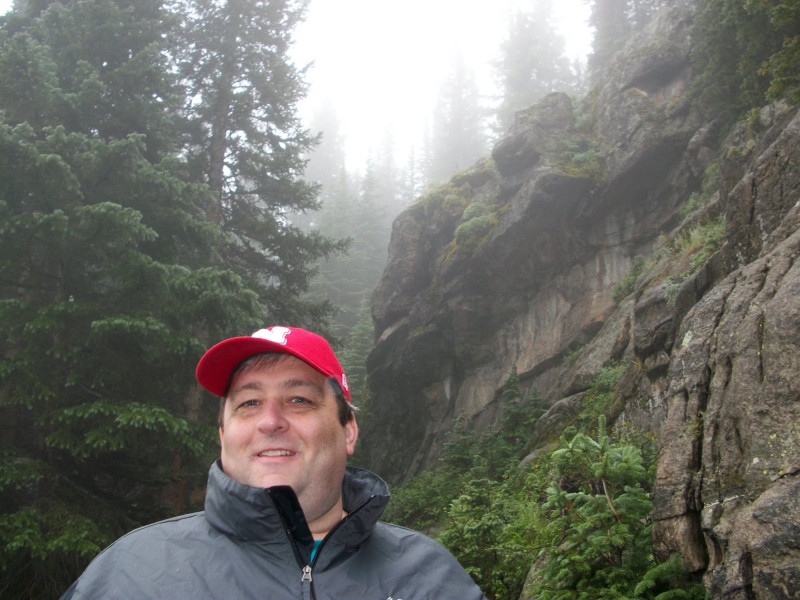
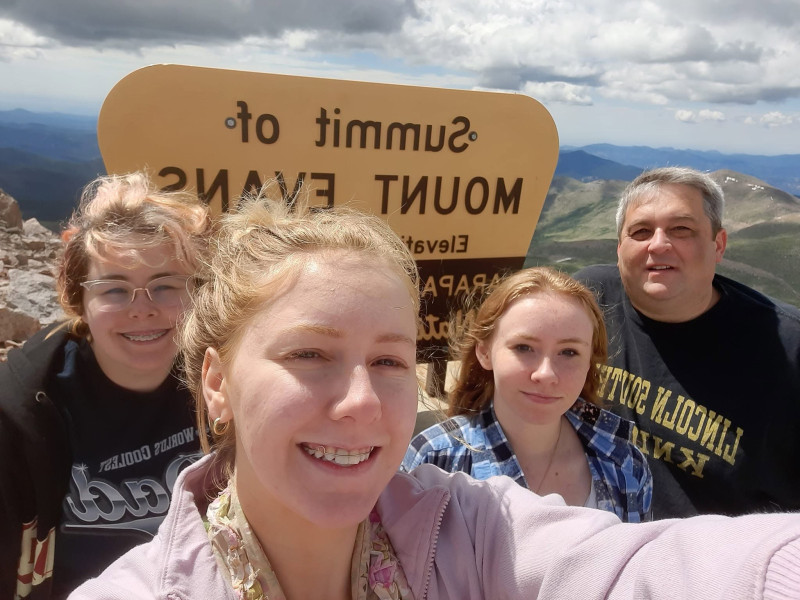
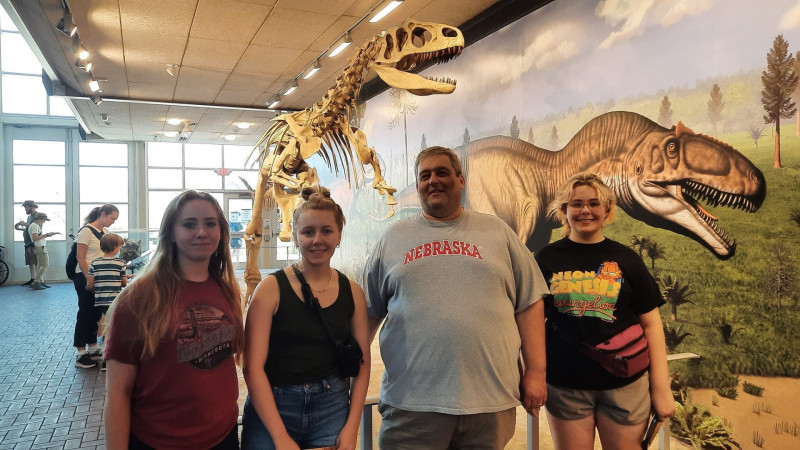
Fellow Students with Varied Experiences, Plus the Learning
Pinkerton remembers being a bit nervous in his first semester at Bellevue University. Then, one day, sealed the deal: He was teaching Organic Chemistry for the first time when he looked up and saw the University’s new president, Dr. Mary Hawkins, sitting in the back of his classroom. Then she began asking questions. He thought, “is THIS some kind of indoctrination?”
Turns out, the president was simply walking by and was curious about the class content. This is totally in her nature as a lifelong learner. The surprise visit became a story he still laughs about—and, a few years later, he encouraged Dr. Hawkins to repeat the classroom visit with a newly hired colleague.
That’s how Pinkerton rolls. He likes to know his students, and he likes to have fun. His students arrive at different ages with varied experiences and goals. A recent high school graduate interested in healthcare might sit beside a nurse who has worked in the field for 20 years. There are adult students and spouses, from US Stratcom and the 55th Wing and athletes. “There is always something they can learn from each other’s perspectives,” he said.
For students just beginning to imagine a career, say in healthcare, the working nurse in the class has already seen what happens in real life and they can more readily connect the dots from lab work to patient outcomes.
Pinkerton compared the Bellevue University online and in class experience to other colleges and universities. “We manage class size, and we are intentional about communication so it’s relevant and meaningful,” he said. “There is no comparing what happens in our setting with a large lecture hall setting. Students catch me after class, ask for help real time, and we build on the conversations throughout the semester, and even multiple classes.”
Students catch me after class, ask for help real time, and we build on the conversations throughout the semester, and even multiple classes.
The University Community that Reflects Pinkerton’s Care Back on Him
In November 2021, Pinkerton’s wife died unexpectedly after suffering a heart attack. Pinkerton was moved by the support he received from fellow faculty and University leaders. When he returned to teaching, he explained to his class what had happened. As the students left that day, every one of them stopped to shake his hand or give him a hug.
Their kindness has stayed with him. For someone who spends semesters learning his students’ stories, it was a reminder that they had come to know his, too. “My students actually do care,” he said.
Today, Pinkerton sees Bellevue University graduates throughout the region, sometimes in places he does not expect. Recently, when one of his daughters taking a chemistry course at UNL went into the chemistry stockroom, the attendant saw her name and asked if she is related to Dr. Pinkerton. She had once been his student.
His daughter did not get the former student’s name, much to Pinkerton’s frustration. Still, he enjoyed hearing the story and it felt good to be remembered. “It’s fulfilling to know that the students who were once In my classroom are out making a difference in the world,” he said.
Founded in 1966, Bellevue University is a non-profit university with more than 70,000 graduates worldwide. The University is a recognized national leader in preparing students for lifelong success with career-relevant knowledge and skills, while making college affordable. Routinely ranked among the nation’s top military and accessible institutions, the University serves residential students at its main campus in Bellevue, Nebraska, and everywhere online with more than 85 degree programs uniquely designed for working adults. The University is accredited by The Higher Learning Commission (hlcommission.org).