

Alumnae Closes Successful Government Career with Gratitude for Groundbreaking Program
Angie Biester was one of the first students at Bellevue University to successfully earn her degree through an accelerated degree completion program. This innovative educational pathway was almost unheard of several decades ago. At that time, traditional educational models dominated, and the concept of completing a degree in a significantly shorter timeframe was still in its infancy. Angie's determination and willingness to embrace this unique opportunity not only set her apart from her peers but also paved the way for future generations of students seeking flexible and expedited routes to higher education.
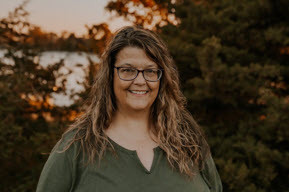
Angie Biester had to make a pivotal choice early on between opportunity and education, but with patience, she was able to excel at both. Accepting a position with the U.S. Department of Agriculture (USDA) after high school, she completed her bachelor’s degree years later through a Bellevue University accelerated degree completion program, an option that was almost unheard of at the time.
As she prepares to retire at the end of 2026 after more than 40 years, Biester says Bellevue University contributed to making her educational dreams come true. “Bellevue University gave me the opportunity to get my four-year degree. I don’t know if I would’ve been able to otherwise,” she said.
Opportunity Came Knocking
Biester learned of a stay-in-school position with the Farm Service Agency (FSA), a division of the USDA, after completing high school in Clay Center, Nebraska. She began working in the role part time while attending Central Community College in Hastings, Neb., moving to full time about a year later. Over the next decade, she earned her associate’s degree while helping Nebraska farmers with loans and financial assistance programs.
However, she still felt education was a goal she needed to achieve. ”I really wanted my bachelor’s degree,” Biester said.
That all changed when she learned about the accelerated Bachelor of Science in Management degree program at Bellevue University. Over the course of a year, she traveled two hours round trip, once a week to learn with her classmates, graduating in 1996.
It’s hard to put into words how much it means to me that the accelerated program was available. It opened a lot of doors I might not have had access to. It played a very important role in me getting to where I’m at in my career and reaching my goal of earning a bachelor’s degree.

Biester said the program fit where she was at in her life and career. “I had been studying accounting and business previously, and I’ve worked in finance my whole career,” she said.
Putting Her Management Skills to Work
Biester worked at the county level until 2010 when she was promoted to the state level. “The Bellevue University degree was really what helped me get this job,” she said. “It was a well-rounded way of tying my education together and gave me a step up to have the confidence I needed to lead in my new role.”
She said some of the learning she’s been able to directly apply to her career includes people skills, management, ethics, and accounting. “This role has enabled me to work on a national program rollout and work with people and demographics across the U.S.,” she said.
Her dedication and level of skill have not gone unnoticed. In 2023, Biester accepted the FSA Lifetime Achievement Award, which recognizes an exceptional FSA employee with more than 30 years with the agency who has improved the organization’s quality of service. She has also served as the national president of the FSA employee association.
“It’s hard to put into words how much it means to me that the accelerated program was available. It opened a lot of doors I might not have had access to,” Biester said. “It played a very important role in me getting to where I’m at in my career and reaching my goal of earning a bachelor’s degree.”
Frequently Asked Questions
Q. What is an accelerated cohort program at Bellevue University?
A. An accelerated cohort program at Bellevue University is a structured degree pathway that allows students to complete their degrees efficiently by moving through courses with a consistent group of classmates. The model delivers the same academic rigor as traditional programs in a streamlined format.
Q. How does the cohort learning model work?
A. Students enroll as part of a cohort and progress through their major courses together in a predefined sequence. Coursework is completed one course at a time or in short sessions, allowing students to stay focused and move continuously toward graduation without re‑registering each term.
Q. Who are accelerated cohort programs designed for?
A. Bellevue University’s cohort programs are designed for working adults and returning students who are balancing education with professional and personal responsibilities. Many participants enter with previous college credit or an associate degree.
Q. Can students transfer previous college credits into a cohort program?
A. Yes. Bellevue University is transfer‑friendly, and students may transfer an entire associate degree into an accelerated cohort bachelor’s program, helping reduce time to completion.
Q. What are the benefits of learning in a cohort?
A. Cohort learning provides a consistent peer group, simplified scheduling, and a clear path to degree completion. Advancing with the same classmates supports collaboration, accountability, and real‑world application of coursework.
Q. Are accelerated cohort programs offered online or on campus?
A. Bellevue University offers accelerated cohort programs in both online and on‑campus formats, depending on the degree program, allowing students to choose the learning environment that best fits their needs.