

Alumnus Follows Interesting Path to Earn Ph.D.
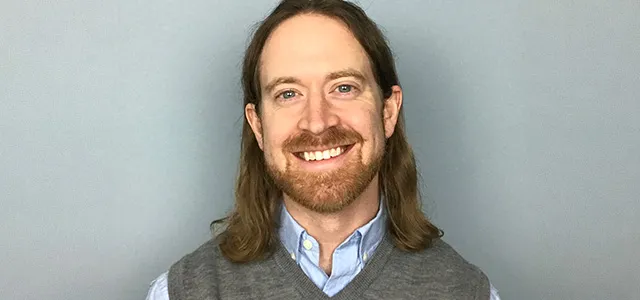
Changing course when approached with challenges has led Kyle Payne, Ph.D., down a unique path – from education to welding to coaching and research.
After earning his Bachelor of Arts in Philosophy and Master of Science in Adult Education, Payne was prepared to begin a career as an instructional designer.
“Unfortunately, the Great Recession limited opportunities in learning and development,” he said. “So, I pivoted, learning how to weld. That path led to opportunities overseeing quality management and then leading talent development initiatives in the structural steel industry.”
Today, after completing the Bellevue University Ph.D. in Human Capital Management, Payne is a leadership consultant and professional coach. He also conducts research on ethical followership, presenting regularly at conferences related to leadership, followership and ethics. He recently did a TEDx Talk on the topic at Lewis University.
A Unique Learning Experience
Payne was attracted to Bellevue University because of its support for nontraditional students. “They also partnered with my former employer to provide cost-effective options for graduate study,” he said. “The focus on human capital management in the Ph.D. program is unique and helped me recognize the potential fit.”
In addition to group projects that provided invaluable learning opportunities, Payne said the experiences he had with Bellevue University faculty can’t be matched. “I succeeded in large part because I had faculty at Bellevue University who took a genuine interest in me and who challenged me to learn and grow,” he said.
Pursuing New Opportunities
Payne said completing his Ph.D. has opened up many opportunities, particularly as a leadership consultant and a professional coach. “Many clients know of Bellevue University, and those who don’t pick up quickly when I talk about my Ph.D. program and the value of the degree,” he said. “From a personal standpoint, I am very confident in the knowledge and skills that I gained through my program.”
His work in the program has also led to significant research opportunities, particularly on ethical leadership and leadership in engineering.
“When I entered the dissertation phase of my Ph.D. program, I had recently started working for an engineering firm. They were gracious enough to support my efforts to survey engineers for my dissertation,” Payne said. “While I do believe that the engineering profession is far behind where it should be as a force for good in society, I have been impressed with the commitment of engineering professionals to doing the right thing and taking seriously the ethical implications of their actions.”
Payne’s interest in the ethics of leadership stems from a passion for leadership styles that benefit all. “What we have missed, and what the followership community is generating theory around, is the powerful role that followers play in co-creating leadership, including ethical leadership,” he said. “After earning my Ph.D. at Bellevue University, I began studying ethical followership because I believe that conceptualizing leadership as a collective process is of greater benefit to society than a continued focus on individual leaders.”
Applying Experience to Practice
Payne said he draws inspiration from how much knowledge depends on experience. Just as he has built his knowledge and skills through experience, he encourages his clients to do the same.
“When I have interviewed professionals about times they have experienced or observed resistance to an unethical request, it is striking to me how much variation exists,” he said. He explains that some simply say “leave the company if you don’t like it” while those who have more tools in their toolbox explore solutions. “Because that practice is so valuable, I tend to focus ethical followership workshops on planning and role-playing realistic examples,” he said.