

Finding Support and Connection at the Military Veteran Services Center
Ashlea Rodriquez: Making a Difference for Veterans Every Day
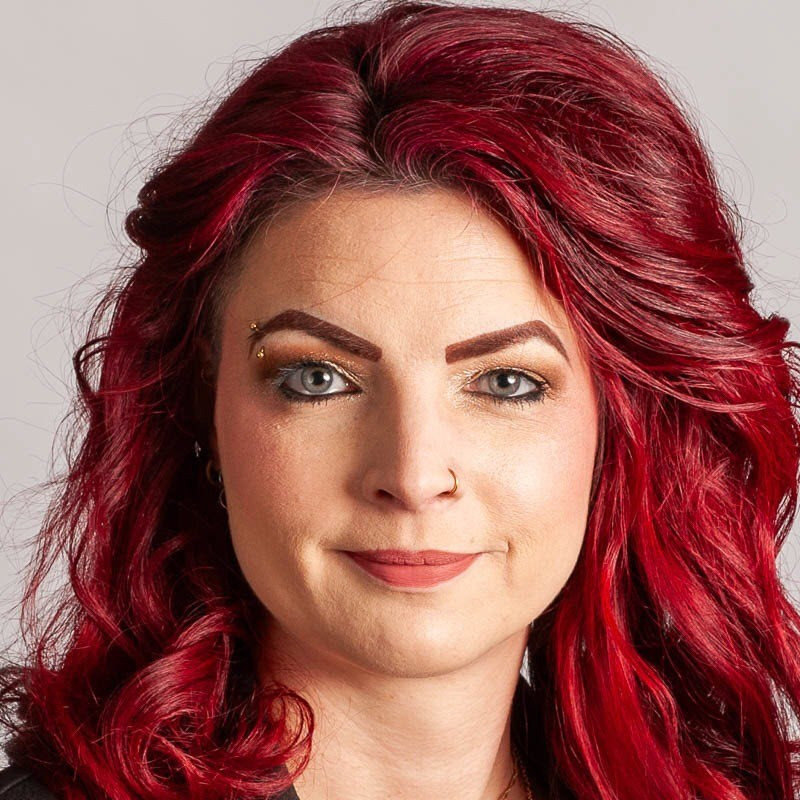
Helping veterans find the support they need isn’t just rewarding — it’s life-changing. For Ashlea Rodriquez, manager of the Military Veteran Services Center at Bellevue University, her work bridges the gap between a veteran’s frustration and relief, ensuring every veteran that comes to campus feels heard, valued, and connected to the resources they deserve.
Ashlea, could you share a bit about your military background?
Absolutely. I grew up in Decatur, Nebraska, a small town about an hour north of Omaha. I joined the Air Force in 2011 as a medic and was first stationed in Washington State, where I began taking college classes. Later, I was stationed in Okinawa, Japan, where I served for the remainder of my military career until a back injury led to my transition out.
After leaving the military, I moved with my husband, who served in Army Infantry Airborne, to Vincenza, Italy, where he was stationed. While there, I continued my education through night classes. We were later stationed in North Carolina, where I continued my studies while raising our three young children.
How did you first get connected with Bellevue University?
When we left North Carolina, I had just one year left on my undergraduate degree. My husband deployed overseas, and I returned to Nebraska to finish my studies at Nebraska Wesleyan University. Unfortunately, during my final term in 2020 — right in the middle of COVID — I discovered I needed an internship to graduate. With three young kids at home and no options for in-person internships, I started Googling veteran service resources. That’s when I found Bellevue University’s Military Veteran Services Center (MVSC).
I called, and it turned out they had just lost all their work-study employees due to COVID. They were happy to accommodate my internship requirements, and I was able to graduate on time. This was a huge relief since I relied on military benefits to support my education.
JR Richardson, the MVSC director, and Heather Carroll, the manager at the time, encouraged me to continue my education. They explained how I could use my benefits to start a master’s program, giving me more time to stabilize my situation. I completed my graduate degree in Business and Professional Communication while working at the MVSC as a work-study. Just before finishing my master’s, I was hired for an admin position in the Clinical Mental Health Counseling program.
Can you describe your current role at the University and how you support military members and veterans?
I worked in the admin role for about 18 months before becoming an adjunct instructor teaching Introduction to Speech. While I enjoyed that role, I was eager to advance my career. When the manager position of the MVSC became open at the end of 2023, I applied and was selected for the role in February 2024.
Now, I oversee the MVSC, helping veterans navigate their benefits and connect with community resources. One unique aspect of the center is its partnerships — we collaborate with 22 organizations, including Disabled American Veterans (DAV). These partnerships not only benefit our students but also serve veterans throughout the local community.
I recently joined the Bellevue Chamber of Commerce Leadership School, a nine-month program that connects leaders with nonprofits, government agencies, and businesses. This is an excellent opportunity to build my leadership skills and strengthen our community ties.
How does your own military experience help you connect with the military students you work with?
Having served in the Air Force and lived overseas twice, I understand what it’s like.
The military is just unique in general. What I love about it is they take people from all over the place, and as soon as you put on that uniform, everything disappears. It gives you a mission and a purpose to connect.
A lot of our veteran clientele that we see here are older, and if you’ve talked to any veteran who’s tried to navigate their veteran benefits, you’ll soon realize they are jumping through confusing hoops. They get frustrated. Sometimes we get veterans who are already very discouraged, and it makes it that much more difficult to help them find and trust an organization that provides benefits.
Ashlea intentionally finds ways to connect with all of the veterans she meets.
Since working here, I have noticed that I stand out a bit. I am a younger, tattoo-covered female with colorful hair, and I even have a nose ring. I wonder how many people don’t think I am a veteran, or don’t have faith that I could understand or relate to their situation. So, I started this test, which was an icebreaker we did when going to a new duty station, and I will ask a veteran three random questions. I have found that it never takes more than three questions to find something that I can connect with them on. Each military experience is unique with its own hardships, but there are so many relatable situations that apply to all of us who once wore the uniform.
What do you find most rewarding about working with military students?
I think one of my favorite parts is seeing the heart and soul that either the veteran organizations or the people in their groups pour into the community. So many of these nonprofits started from something simple—like meeting someone randomly in a waiting room and starting a conversation, or working up the courage to ask, 'Hey, would you want to join me on this venture?' For example, one veteran asked a church musician if they’d help, and now they have weekly jam sessions with veteran guitar players and are hosting events for the local community.
It’s easy to isolate and lose sight of what’s happening around you, but seeing these connections form is incredible. Whether they’re 80 years old or 30, veterans find common ground and discover so many ways to support each other. That’s what makes it all so rewarding.