

From Card Catalogs to AI: How Robin Bernstein Has Helped Bellevue Students Find Answers for Nearly Five Decades
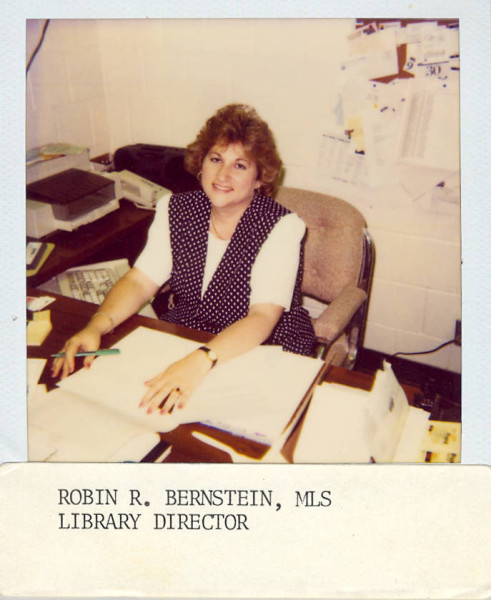
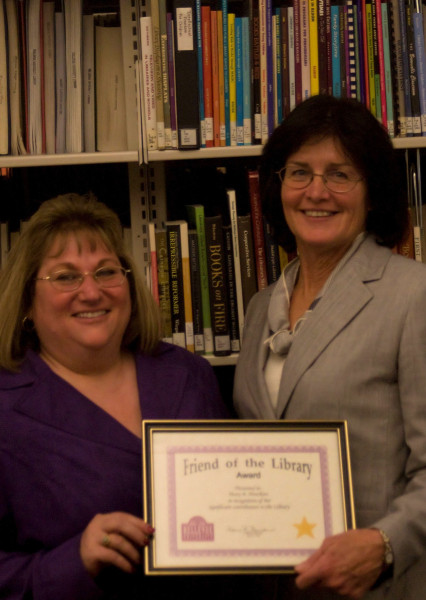
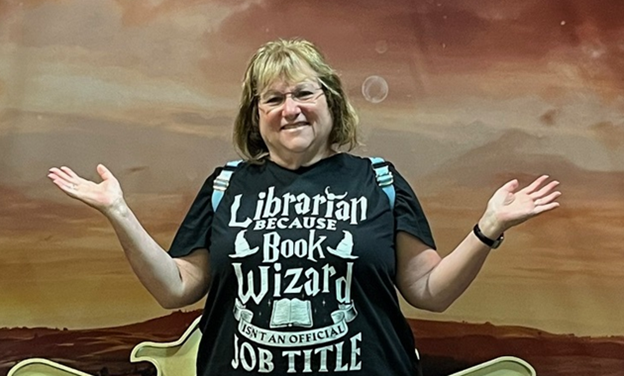
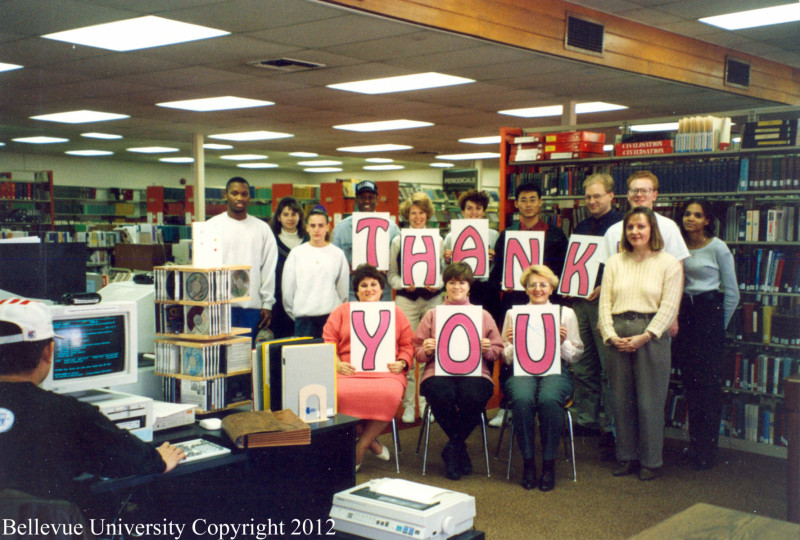
- Nearly 48 years ago, Robin Bernstein took a part-time library job at Bellevue University—and never left. Today, she is the University's longest-serving employee.
- The library has transformed from card catalogs and paper indexes to digital databases and AI-enabled research tools.
- Bellevue librarians help students develop critical skills for evaluating information and using AI responsibly.
- From personal librarians to 24/7 support, the library provides resources and expertise for students around the world.
One Person Leading a Research Transformation
Robin Bernstein began working in Bellevue University’s library in 1978, when research looked very different than it does today.
There were no online databases. No internet. No search engines. No artificial intelligence.
Students searched through drawers of card catalogs, photocopied pages from printed indexes, and sometimes waited weeks for periodicals and articles to arrive through the mail.
Today, Bellevue University students have access to over a hundred databases, hundreds of thousands of digital resources, and research assistance around the clock.
Remarkably, one person has been there through it all.
As Senior Director of Library Services, Bernstein has spent nearly 48 years helping students navigate an ever-changing information landscape. She is the University’s longest-serving staff member. During that time, she has witnessed—and helped lead—one of the most significant transformations in higher education.
A Student Who Never Left
Bernstein’s Bellevue University story began as a student.
Like so many students and alumna, Robin came to Bellevue as part of a military family stationed at Offutt Air Force Base.
Originally planning to attend college on the East Coast, her Mom (like so many Moms) wanted her to stay closer, so she enrolled at then Bellevue College.
While registering for classes, she noticed a job posting on a bulletin board for a part-time position in the library.
She applied. She got the job. And she’s never left.
“It was the perfect job,” Bernstein recalls. She attended classes in the morning and worked afternoons in the library, balancing both roles throughout her college career.
While still earning her degree in Business Administration, she accepted a full-time position in the library, and in 1994, earned her Master of Library Science (MLS) and became Director, all integral to her storied career that spans nearly five decades.
Reinventing the Library
During Bernstein’s early years, much of the library work was manual.
For nine years, she personally typed catalog cards for the library’s collection. Every book required multiple cards. Every update required manual maintenance.
Then technology arrived.
In 1987, Bellevue University’s library received its first computer system. Soon after came online databases, electronic journals, digital catalogs, and eventually internet-based research tools.
Many industries struggled to adapt to technological change. Libraries were no exception. But Bernstein viewed innovation differently.
“We’ve always been on the leading edge of trying new things,” she says. “We’ve taken risks. Sometimes they pay off. Sometimes they don’t. But we always moved forward.”
That mindset mirrors Bellevue University’s culture of innovation—a culture Bernstein has experienced under three university presidents and countless institutional changes.
Instead of resisting technology, she embraces it. Instead of protecting old systems, she reimagined what a library could become.
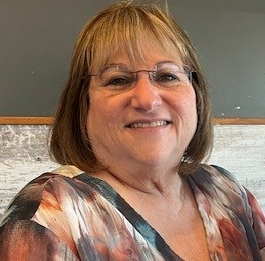
Libraries are absolutely relevant in the age of AI. In fact, librarians may be more important than ever. I look at AI as another tool. Our role is helping people learn how to use that tool effectively.

Libraries' Relevance in the Age of AI
As AI - artificial intelligence - becomes the latest technological disruptor, some people question whether libraries remain relevant. Bernstein doesn’t hesitate with her answer.
“Libraries are absolutely relevant in the age of AI. In fact, librarians may be more important than ever. I look at AI as another tool,” she went on. “Our role is helping people learn how to use that tool effectively.”
Rather than replacing research, AI introduces new challenges. Students must learn how to write effective prompts, evaluate results, identify inaccuracies, and verify information before using it.
That’s where librarians step in. For decades, librarians helped students find information. Today, they also help students evaluate information.
The skill set has evolved, but the mission remains the same. “We don’t know everything,” Bernstein says with a smile. “But we know how to find everything.”
A Personal Approach to Student Success
Perhaps the most innovative service Bernstein has helped create is Bellevue University’s Personal Librarian Program.
The concept is simple, but powerful. Students who enroll are paired with a librarian who remains their research partner throughout their entire Bellevue University experience.
Whether they’re first-year students or doctoral candidates, participants have a consistent point of contact who understands their academic goals, research interests, and learning needs.
The program currently serves hundreds of students and has become a unique support system for learners who might otherwise feel overwhelmed by the research process, especially with the myriad choices brought to the fore via AI.
“It’s about taking away anxiety,” Bernstein explains.
Students don’t have to navigate complex databases alone. They don’t have to wonder where to start. They have someone in their corner.
In an increasingly digital world, the program creates something surprisingly valuable: a personal connection.
We don’t know everything. But we know how to find everything.
Supporting Students Everywhere
Bellevue University’s commitment to serving working adults and online learners has required the library to evolve in new ways.
Today’s students are located locally, across the country, and across the globe.
To support them, the library offers extensive digital resources, virtual consultations, accessibility accommodations, and a 24/7 librarian chat service that ensures help is always available.
The goal isn’t simply access to information. It’s access to expertise.
Whether a student logs in at noon or midnight, someone is available to guide them.
Bellevue University’s library is part of a national support system, so that librarians are available to students at all hours. So when Bellevue University’s library is closed, another institution’s librarian assists Bellevue University students at that time. But Bernstein’s team always follows up personally to ensure that students received the help they needed.
That level of care reflects a philosophy that has guided her entire career. Technology should make learning easier, not more complicated.
Looking Toward the Future
After nearly five decades at Bellevue University, Bernstein has seen extraordinary changes.
Card catalogs have disappeared. Printed indexes have become searchable databases. Research that once took weeks can now happen in seconds. And AI is reshaping how people seek and consume information.
Yet through every transformation, one thing has remained constant: students still need guidance. They still need trusted experts. They still need people who can help them separate information from misinformation and curiosity from confusion.
That’s why Bernstein remains optimistic about the future of libraries. The tools will continue to change. The mission will not.
As she reflects on nearly 48 years of service, Bernstein’s career offers a powerful reminder that innovation isn’t about replacing people. It’s about helping people succeed.
And for generations of Bellevue University students, that’s exactly what she’s done.
Founded in 1966, Bellevue University is a non-profit university with more than 70,000 graduates worldwide. The University is a recognized national leader in preparing students for lifelong success with career-relevant knowledge and skills, while making college affordable. Routinely ranked among the nation’s top military and accessible institutions, the University serves residential students at its main campus in Bellevue, Nebraska, and everywhere online with more than 85 degree programs uniquely designed for working adults. The University is accredited by The Higher Learning Commission (hlcommission.org).