


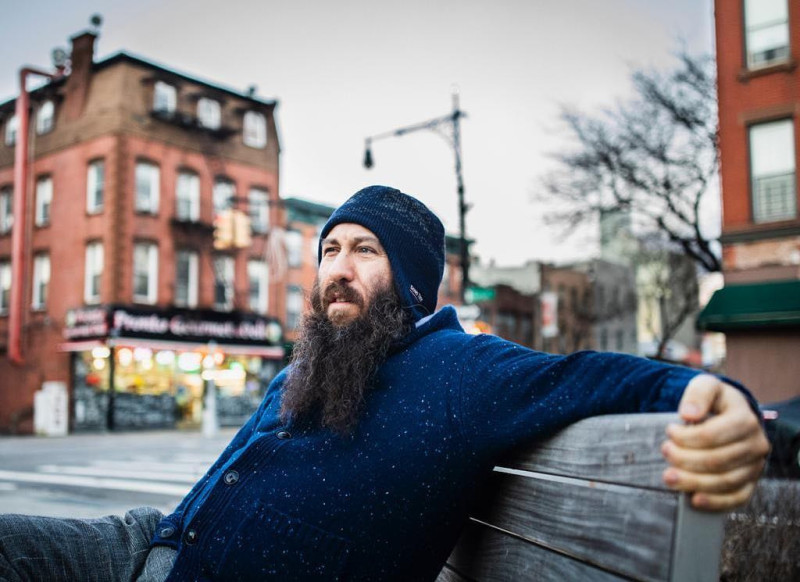
Weinstein Builds Upon Diverse Experiences with Master’s Degree
Jewish Rabbi Finds Flexibility and Growth in Clinical Mental Health Counseling Program
Film scout, Rabbi, author, and advocate may seem like opposing career choices but for Simcha Weinstein they’ve all played a role in his personal and professional journey. Now he’s developing his skills even further by pursuing a Master of Science in Clinical Mental Health Counseling at Bellevue University.
The Story Behind his Eclectic Career
Weinstein earned his bachelor’s degree in Film History from Manchester Metropolitan University in England. “This sparked my initial foray into the entertainment industry as a film and television location scout,” he said. “However, my trajectory took a profound turn when I delved into my Jewish historical and cultural heritage during an extended stay in Yeshiva in Israel, ultimately leading me to embrace the role of a rabbi.”
He said his time in Israel was transformative. “I discovered a deep sense of fulfillment in serving others, particularly in pastoral care,” Weinstein said. After meeting his wife and relocating to Brooklyn, he returned to academia as the rabbi at Pratt Institute. “There, I endeavored to merge spirituality with cultural exploration, culminating in the publication of a bestselling book that examined the Jewish influences on superheroes and their creators.”
The book – Up, Up, and Oy Vey – explores the intersection between Jewish culture and the world of superheroes. “It delves into the profound influence of Jewish immigrants on the creation and evolution of iconic comic book characters, revealing how their experiences of identity, resilience, and social justice shaped the narratives we know and love today,” Weinstein said.
Over the past few years, Weinstein has developed a passion for peer support advocacy, serving as a family peer support advocate and now training the peer support workforce for Families Together in New York City. “These experiences have been instrumental in amplifying marginalized voices within our systems of care and shaping policies in Albany related to mental health and developmental disabilities,” he said.

I’d recommend the program to those looking to be challenged, changed and committed, and want professors that feel like mentors."

Furthering Advocacy Through Education
Through his own experiences, Weinstein came to believe that mental health counseling would be a natural continuation of peer advocacy. “Peer support training, with its focus on strength-based and empathetic support, provides a solid foundation for clinical counseling,” he said. “It felt like a natural evolution for my career, allowing me to further develop my skill set and continue advocating for those in need.”
He found Bellevue University and its CACREP-accredited Clinical Mental Health Counseling program through the recommendation of a good friend. “The flexibility and professionalism of the institution, coupled with its faculty's apparent understanding of marginalized voices, resonated deeply with me,” he said. “Additionally, as someone with a child on the autism spectrum and a late diagnosis of ADHD, I am eager to research adaptability within the context of neurodiversity and mental health.”
CACREP stands for the Council for Accreditation of Counseling and Related Education Programs. The council is an independent, nationally recognized accrediting body that evaluates graduate counseling programs in the United States to ensure they meet the counseling profession’s standards.
Through his studies, Weinstein has found the flexibility and growth that will fuel his efforts to make an even bigger difference going forward. “My experience with Bellevue University has been very positive,” he said. “The professors are very friendly, relatable, supportive, and open to new ideas and perspectives.”
Weinstein also said the online modules are flexible, and since they are so interesting and available 24/7, he finds himself logging throughout the day and night.
“I’d recommend the program to those looking to be challenged, changed and committed, and want professors that feel like mentors,” Weinstein said.