

What 43 Years of Teaching Psychology Has Taught Dr. Roxanne Sullivan About Learning, Technology, and Human Behavior
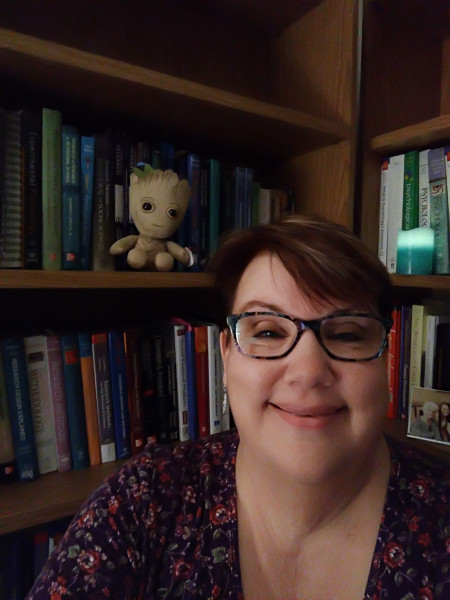
- Dr. Roxanne Sullivan is Bellevue University's longest-serving faculty member, with 43 years of service.
- Dr. Sullivan helped transition Bellevue University's psychology program to an online format while maintaining academic rigor and student engagement.
- A developmental psychologist by training, she believes psychology's greatest value lies in helping people understand human behavior, communication, decision-making, and motivation.
Students Haven't Changed That Much
After more than four decades in higher education – and specifically at Bellevue University, Dr. Roxanne Sullivan has learned something surprising:
Students haven’t changed nearly as much as people think.
As Bellevue University’s longest-serving professor and longtime Psychology Department Chair, Sullivan has spent 43 years helping students understand human behavior. Along the way, she’s witnessed the rise of personal computers, the internet, online education, smartphones, social media, and now artificial intelligence.
Yet despite all the technological disruption, the fundamentals of learning remain remarkably consistent.
“People always think students today are completely different,” Sullivan says. “The excuses have changed from ‘the dog ate my homework’ to ‘my computer ate my homework,’ but many of the challenges are the same.”
The Human Side of Learning
Sullivan’s perspective is grounded in both scholarship and experience.
A developmental psychologist by training, she earned degrees from the University of Iowa, Purdue University, and Michigan State University before joining Bellevue University in 1983.
Over the years, her focus shifted from researching young children to understanding how college students learn most effectively. One lesson stands above the rest: students thrive when they take ownership of their education.
“The biggest change I’ve seen is the amount of responsibility students take for their learning,” Sullivan explains. “Some simply don’t have modeling when it comes to college.” That’s especially true for first-generation college students, a group Sullivan understands personally.
Despite growing up in a family without college degrees, education was always expected. Her parents encouraged academic achievement and instilled a belief that learning could create opportunities beyond what previous generations had experienced.
Today, she works to provide that same encouragement to students navigating college for the first time.
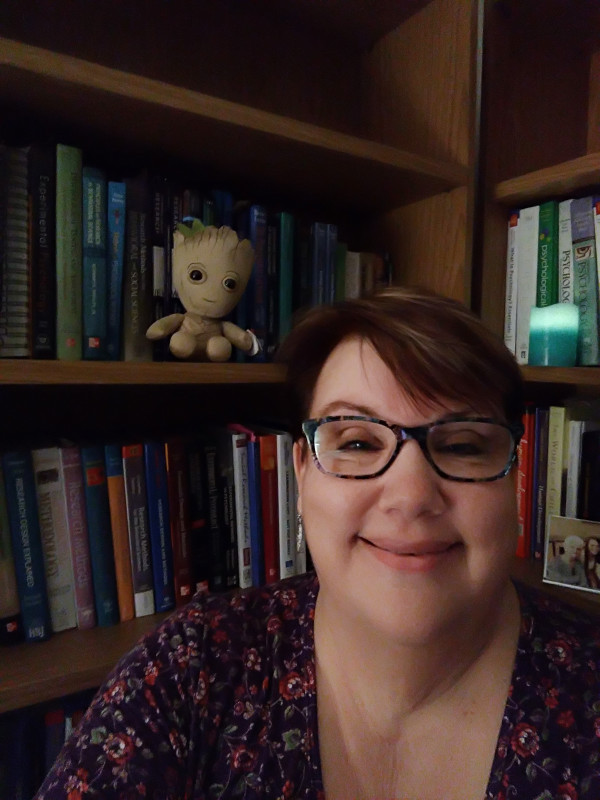
In today’s workplace, understanding how people think, communicate, make decisions, and respond to change may be more valuable than ever.

Psychology Is More Relevant Than Ever
When we asked Sullivan if, and how, psychology has changed over the years, she said that it hasn’t changed much. “When people think about psychology as a major or profession, they think you’re going to analyze them.” Many of Sullivan’s students aspire to be therapists or counselors, and while some go on and earn these credentials, she made the point that what people learn in psychology courses runs wide and deep across many other careers – and life. “In today’s workplace, understanding how people think, communicate, make decisions, and respond to change may be more valuable than ever. It’s not just the content,” she said, “It’s the skill sets.”
Those skills include critical thinking, communication, problem-solving, empathy, and understanding human motivation—capabilities that apply in business, marketing, leadership, healthcare, education, and countless other professions.
In fact, some of Sullivan’s most successful former students never became practicing psychologists at all. Instead, they apply psychological principles in careers ranging from real estate to nonprofit leadership to veteran services.
The common denominator isn’t a specific job title. It’s an understanding of people.
The Online Learning Experiment That Worked
When Bellevue University began expanding its online offerings, Sullivan wasn’t immediately on board. Like many faculty members, she worried about whether students could receive the same educational experience outside a traditional classroom.
Rather than resisting the change, she decided to shape it.
Over the course of several years, Sullivan helped move nearly an entire psychology program online while maintaining the rigor and engagement she believed students deserve. Her goal was simple: online students should receive the same quality education as students sitting in a classroom.
Today, psychology remains one of Bellevue University’s strongest programs, with online enrollment continuing to grow.
The experience taught Sullivan an important lesson about innovation – technology works best when it serves educational goals.
People always think students today are completely different. The excuses have changed from ‘the dog ate my homework’ to ‘my computer ate my homework,’ but many of the challenges are the same.
The AI Conversation Is Familiar
As artificial intelligence rapidly enters classrooms and workplaces, Sullivan sees parallels to earlier technological revolutions.
When calculators became common, educators worried students would stop learning math. When the internet emerged, many feared research skills would disappear.
Now, AI has become the newest source of concern. Sullivan believes the discussion should focus less on fear and more on responsible use. “Like anything else, you learn to use the tool appropriately,” she says.
The solution isn’t avoiding the technology altogether. The solution is teaching students how to question it. “Use it,” she advises. “But think about what it’s giving you.”
AI can help students brainstorm ideas, create visuals, summarize information, and explore concepts. But it cannot replace critical thinking, judgment, or genuine understanding.
But Sullivan warns: AI can generate inaccurate information, fabricate references, or confidently present incorrect conclusions. She is fine with students using AI, because she knows they’re going to, but she instructs them to cite their sources and deploy their good thinking to a piece that AI has helped research.
Curiosity Still Wins
Throughout the interview, one theme surfaced repeatedly: curiosity.
Whether discussing psychology, technology, or student success, Sullivan returned to the importance of asking questions, exploring ideas, and remaining open to learning. That’s one reason she remains optimistic about the future.
While technology will continue to evolve, the qualities that drive success remain remarkably stable: Students who are curious. Students who take responsibility. Students willing to challenge assumptions and think critically. Those are the students who thrive.
And after 43 years in the classroom, Sullivan has seen enough evidence to know that will never change.
Founded in 1966, Bellevue University is a non-profit university with more than 70,000 graduates worldwide. The University is a recognized national leader in preparing students for lifelong success with career-relevant knowledge and skills, while making college affordable. Routinely ranked among the nation’s top military and accessible institutions, the University serves residential students at its main campus in Bellevue, Nebraska, and everywhere online with more than 85 degree programs uniquely designed for working adults. The University is accredited by The Higher Learning Commission (hlcommission.org).
A Legacy Beyond Psychology
As Sullivan prepares for retirement in a year, her influence extends far beyond the psychology department.
Thousands of students have passed through her classrooms. Hundreds have chosen careers inspired by lessons learned under her guidance.
Perhaps most importantly, she has modeled what lifelong learning looks like.
From adapting to online education to thoughtfully embracing AI, Sullivan has never stopped learning herself. That may be her most enduring lesson. The world will continue to change. New technologies will emerge. New challenges will appear.
But curiosity, critical thinking, and a commitment to understanding people will always matter.
And those are lessons worth carrying forward.