

New Faculty Member Brings Real-World Focus to New AI Master’s Program
When most people think about artificial intelligence, they think about tools like ChatGPT.
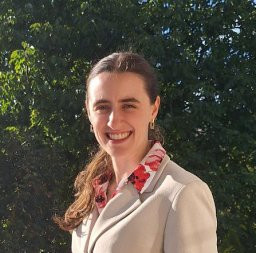
Dr. Ashley Babjac, Assistant Professor of Artificial Intelligence, sees something much bigger.
“AI has been around for decades,” she said. “It’s behind so many systems we rely on every day.”
That broader view is shaped by a career spanning statistics, computer science and bioinformatics—and now informs her role at Bellevue University, where she will teach in the Master of Science in Artificial Intelligence program set to launch this summer.
Looking beyond the hype
For Babjac, the current moment in AI is less about novelty and more about acceleration.
“What’s changing now is how quickly we can apply it to solve complex problems,” she said.
That includes work in healthcare, infrastructure and environmental science. Her research has ranged from predicting patient outcomes to using AI to identify enzymes capable of breaking down pollutants like ocean plastics—work that can significantly reduce the time and cost of scientific discovery.
“Each experiment can cost thousands of dollars,” she said. “AI helps narrow down the possibilities so you can focus on the most promising options.”
It’s also why she emphasizes that understanding AI requires more than knowing how to use a tool.
“If you ask a bad question, you’ll get a bad answer,” she said. “AI is powerful, but only if you understand the fundamentals behind it.”
A program built for real-world application
That focus is central to Bellevue University’s new master’s in artificial intelligence program.
“What really stood out to me is how well-rounded it is,” Babjac said. “It covers a lot of ground, but it also goes deep where it matters. Students aren’t just learning theory, they’re applying it.”
The program is designed to give students a holistic view of AI, combining foundational concepts, data science and hands-on application, with the goal of solving real-world business problems.
Students will work with real data, explore case studies and build practical solutions that mirror challenges they may encounter in the workforce. In Babjac’s courses, that includes projects like robotics simulations and reinforcement learning models.
“We want students to be able to do something with what they’ve learned,” she said. “Not just understand it but apply it.”
While the field continues to evolve, Babjac points to the importance of a strong foundation.

The field changes quickly, but the fundamentals don’t. If you understand those, you can adapt to whatever comes next.

“The field changes quickly, but the fundamentals don’t,” she said. “If you understand those, you can adapt to whatever comes next.”
Preparing leaders in AI
One of the program’s distinguishing features is its flexibility. Students can tailor their coursework through electives and certificate options, allowing them to pursue different paths—whether that’s building AI systems or leading teams that implement them.
“Our goal is to develop people who can not only understand AI, but also lead and orchestrate it,” Babjac said. “That’s where a lot of opportunity is right now.”
Rather than focusing on a single specialization, the degree prepares students for a range of roles, including machine learning engineers, data scientists and AI research specialists.
“AI touches everything,” she said. “Having that broader perspective gives students flexibility in where they go next.”
Meeting students where they are
In the classroom, Babjac’s approach is grounded in interaction and adaptability, shaped by years of teaching and curriculum development in artificial intelligence and computer science.
“Graduate students come in with very different backgrounds and goals,” she said. “My job is to meet them where they are and help them get where they want to go.”
That means creating opportunities for hands-on learning, encouraging exploration and helping students find their direction within the field.
As AI becomes more integrated into everyday work, Babjac emphasizes the importance of using it thoughtfully. Her experience working with sensitive data in healthcare has reinforced the need for strong ethical awareness, from protecting patient information to understanding how AI systems are trained and used.
“You can’t just plug information into a tool without thinking about where that data goes,” she said. “Understanding those implications is part of being responsible with AI.”
That perspective is woven into her teaching, helping students think not only about what AI can do, but how it should be used.
Looking ahead
As the program prepares to launch, Babjac is focused on what students will take with them when they leave.
“The goal isn’t just to learn AI,” she said. “It’s to understand it well enough to use it, lead it and adapt as it changes.”
With that foundation, she believes students won’t just keep up with the field—they’ll help shape it.